
"I Don't Know Why I Ate That" - Here's What's Really Going On
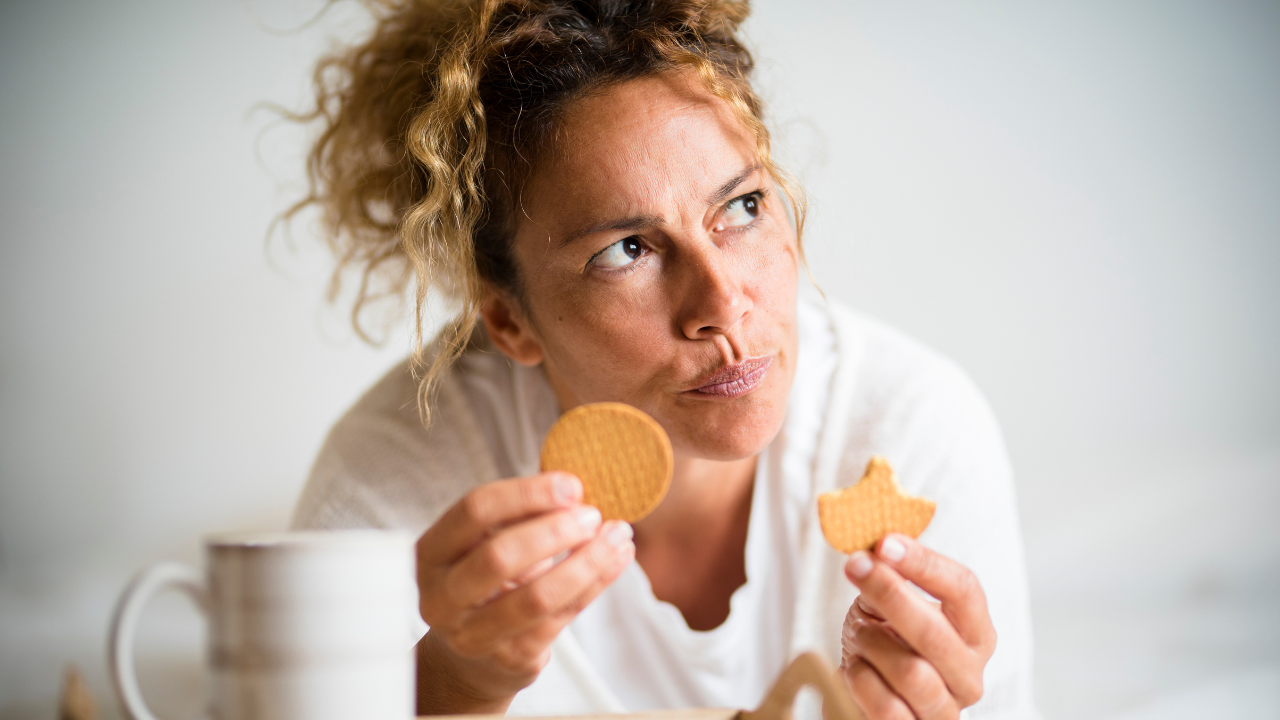
Aug 01, 2026Think about the last time you ate something you hadn't planned to. Maybe it was a handful of something from the pantry on your way past, a snack while scrolling your phone, or the biscuit that somehow appeared in your hand halfway through a work email.
Now try to remember the moment you decided to eat it.
For a lot of people, that moment is genuinely hard to find. Not because their memory is bad, but because there often wasn't a conscious moment at all - the eating simply 'happened'.
Your Brain Is Built to Run on Autopilot
This isn't a willpower problem. It's how your brain is designed to work.
Think about driving somewhere familiar - your commute, the school run, the route to your regular supermarket. You arrive, and you can barely recall the drive itself, yet you arrived in one piece and did all of those driving activities you needed to. You stopped at lights, checked mirrors, changed lanes, slowed and sped up, made hundreds of small decisions, and you did almost all of it without consciously thinking about a single one of them.
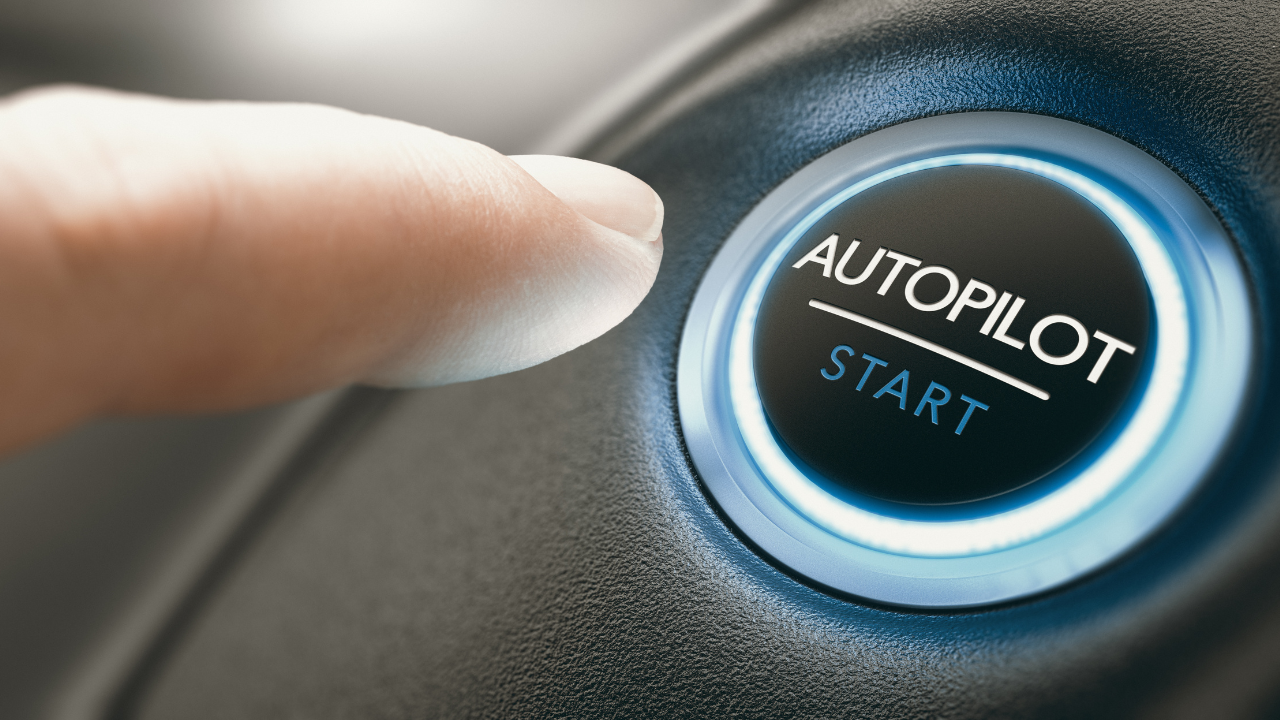
That's not a lack of attention, it's efficiency. Your brain is constantly looking for ways to save energy, and one of its favourite tricks is turning anything you repeat, into an automatic pattern, so it no longer has to think its way through it each time.
This is incredibly useful for things like brushing your teeth, getting dressed and making a cup of tea whereby it's helpful to not have to consciously think about every step of each process. The problem though is that your brain doesn't distinguish between the habits you want on autopilot and the ones you don't. For example, if you've reached for something to eat in the same situation enough times - after a stressful day, sitting down in front of the TV, walking past the kitchen - your brain quietly files that away as "this is what we do here." From then on, it doesn't wait for a conscious decision from you, it simply runs the program.
That's why so many people say some version of, "I don't even know why I ate that, I just did." In a very real sense, that's true. The pattern took over before conscious choice had a chance to have an impact.
Why This Matters
Here's the part that trips people up: if most of your eating is happening automatically, then trying to change it with willpower alone is like trying to out-argue a habit that was never really having a conversation with you in the first place. Willpower works on conscious decisions, but Autopilot doesn't ask you to consciously decide anything - that's the entire point of it.
This is why "just eat less" or "just have more control" so often doesn't work, even for people who are genuinely motivated and know exactly what they're supposed to be doing differently. The issue was never information or intention, it's that the behaviour was happening before either of those had a chance to get involved.
So if willpower isn't the answer, what is?
The Tool That Actually Interrupts Autopilot: The Pause
The good news is that Autopilot isn't unbreakable. It just needs one thing to switch off, even briefly, and that thing is a moment of interruption and genuine awareness, inserted before or during the behaviour, not after.
That's exactly what we call the Pause, and it can start with something as small as three deep breaths.
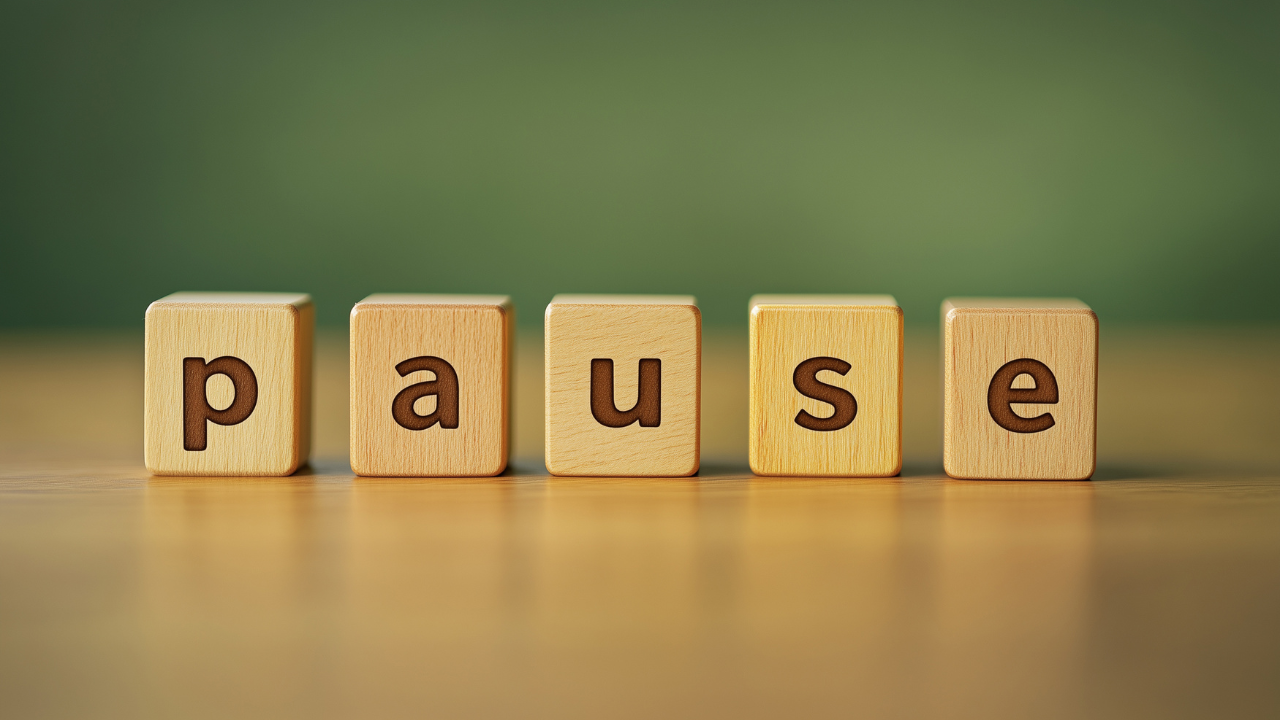
Here's why this works. When you're about to eat automatically, your body is usually running on a kind of momentum - reach, take, eat - one smooth motion your brain has practised many times before. Three slow breaths however interrupts that motion. It's not long enough to be a big ask, and it's not a rule about whether you're "allowed" to eat. It's simply a moment that didn't exist in the automatic version of the pattern.
In that small gap, you get to ask a question your Autopilot never asks: What's actually going on for me right now?
Sometimes the honest answer is, "I'm genuinely hungry", and that's useful information too. Often though, the pause reveals something else entirely - you're feeling tired, or stressed, or the day has simply been a lot, and food was about to become the fastest way to feel different, not because your body needed fuel, but because your brain had learned that this particular action works to change your emotional state and provide some relief.
Once you can see that clearly, even for a moment, you're no longer inside the automatic pattern. You've created just enough space to actually choose, whether that's still deciding to eat, or realising that what you needed was something else entirely - a break, a breath of fresh air, five minutes to yourself, a hug, a stretch or something else.
You Don't Need to Overhaul Everything
The three-breath pause works precisely because it asks so little of you. You don't need twenty minutes of meditation, a journal, or a strict new rule. You need three breaths and a single honest question.
Try it next time you notice yourself reaching for or eating something without quite deciding to. Pause. Breathe, slowly, three times. Then ask: What's actually happening for me right now?

You might still choose the biscuit, and that's completely fine - the goal was never to eliminate every automatic moment in your day. The goal is simply to make sure that when you do eat, it's because you chose to, not because an automatic unconscious pattern chose for you.
That small shift, from reacting to choosing, is where real, lasting change tends to begin.
