

Missing Food: Grieving What Surgery Changed
Nov 01, 2026Surgery brings physical changes you expect, like smaller portions and feeling full sooner, yet it’s often the emotional changes that catch people off guard.
For many people, food represented more than just eating. It was how they unwound after a hard day, the treat they looked forward to, the centre of birthdays and family dinners, or a way of showing love by cooking for others. After surgery, you may not be able to enjoy those things in the same way, and that can bring up real grief, which is very common. It might look like sadness when someone else is eating your old favourite meal, a heaviness at celebrations, or a flat feeling you can’t quite explain, even while the unwanted weight is coming off.
We usually think of grief as something that follows losing a loved one, yet we can also grieve a routine, a source of comfort or a way of life, and food can be all three. It’s natural and understandable to miss food and eating the way you used to. You can be proud of your decision, grateful for what it’s doing for your health, and still feel sad about what’s changed. Many people feel they should only be happy, which can make the sadness harder to admit.
One client expressed this to us recently - they struggled with low mood after their surgery and significant weight loss, and only later realised it was because they had lost food as a source of joy. Many people go through the same thing without making that connection.
So why would losing food affect someone this deeply? For many of us, it was never just about eating - it was quietly meeting some of our most important emotional needs, and those needs don’t go away when the way we eat changes.
Food Means More Than We Think
The six core human needs is a framework popularised by Tony Robbins, and one we use in our coaching because it explains so much of what people experience after surgery. Every one of us has these needs, and everything we do is, in some way, an attempt to meet them. Food can meet several needs at once, which is why it can hit us hard when we can’t access that strategy to meet our needs after surgery.
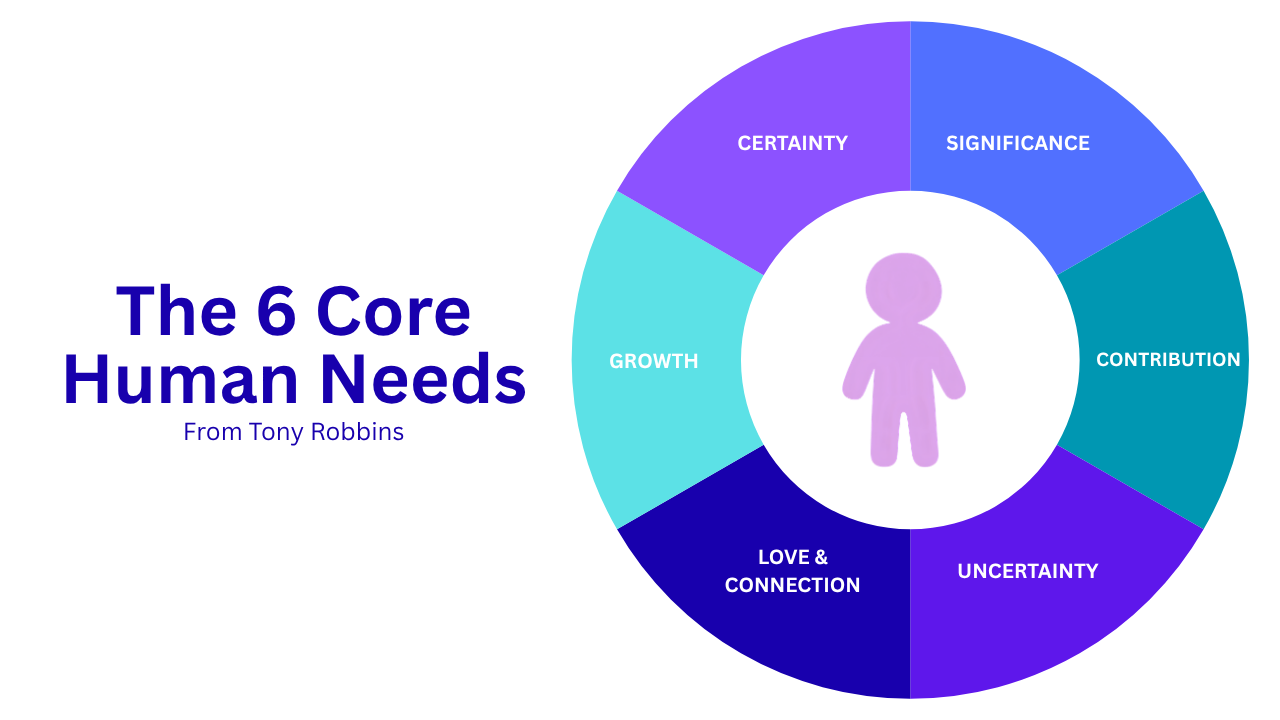 Here’s how it may have been showing up for you:
- Certainty / Security / Comfort: feeling safe, stable and in control. Food can meet this through familiar meals, favourite venues, regular mealtimes and known flavours.
- Uncertainty / Variety / Adventure: newness, surprise and change. Food can meet this through new restaurants, unfamiliar cuisines and different ingredients.
- Significance / Importance / Feeling special: feeling valued, capable and unique. Food can meet this through being a great cook or treating yourself perhaps as a reward or because you feel you’ve earned it.
- Love and connection / Belonging / Closeness: feeling close to others and to yourself. Food can meet this through shared meals, family traditions and cooking for people you love.
- Growth / Learning / Development: expanding and becoming more. Food can meet this through learning to cook and trying new cuisines.
- Contribution / Service / Giving: giving to something beyond yourself. Food can meet this through feeding your family, your community or by bringing a plate to share.
When Food Becomes a ‘Primary Vehicle’
When something meets two of our needs, we feel a connection with it. When it meets four, we form a bond with it, and when it meets all six, it becomes a ‘Primary Vehicle’, something we never want to leave for as long as it keeps meeting every need. For some people their favourite or only vehicle is food, and for others it may be one of their vehicles.

It’s important to be aware of the quality of our Primary Vehicles, meaning how sustainable it is and how it leaves us feeling over time. Gardening, for example, is a sustainable, high quality vehicle, whereas Smoking is not. The framework also suggests that even when something meets as few as three of our needs, it can become, in effect, an addiction. That’s a big reason food and eating can be so hard to step back from - it isn’t only a habit, it’s a way of feeling safe, connected and valued all in one go.
The difficulty comes when we have only one or two vehicles, because if one changes or is taken away, several needs are left unmet at once. That’s why the loss after surgery can feel so big - it isn’t just the food you miss, it’s everything the food was doing for you. This doesn’t mean the surgery was a mistake - it’s simply a sign that your needs are still there, and they’re asking for new ways to be met.
In our work with Fresh Start clients, we see this often. Many people describe the same flatness once food stops doing its old job, and it tends to ease as they find other, more sustainable ways of meeting those needs.
Resourceful and Unresourceful Ways to Meet a Need
Every need can be met in a resourceful, sustainable way, or in an unresourceful one that’s obtainable but not sustainable. The need itself is never the problem, and the way we meet it is what matters. Remember also that we all have these same needs, and we’re hard-wired to seek ways to meet them, so none of this is about blame or self-judgement..
A resourceful way leaves you feeling better in the long run and can be repeated without a cost. An unresourceful way might feel good in the moment, yet it tends to leave you feeling worse afterwards, costs you something (such as your health, money, relationships or self-esteem) and often needs more and more of it to work.
For example, you might meet your need for Certainty with a routine that supports and nurtures you, or you can meet it by avoiding change and watching TV in all of your spare time. You might meet your need for Significance by finishing something you’re proud of, or you can meet it by seeking attention through drama and criticising others. You might meet your need for Variety by trying a new hobby, or you can meet it by falling into overwhelm or turning to alcohol or other substances. Food can sit on either side of this, which is a big part of why this is so human.

Contribution and Growth work a little differently, because they can only be met in resourceful ways, which makes them a good place to start. After surgery, the old way of meeting a need may no longer work for your body, and if your needs aren’t met in some other way, it’s easy to slide towards another unresourceful option without noticing.
What You Can Do About It
Acknowledge the Grief. Say it out loud or write it down e.g. “I miss this.” Pushing the feeling aside tends to make it louder, and it can show up as low mood, restlessness or a pull back towards old habits, especially those connected to food.
Check how you’re meeting your needs now. Notice what you turn to when you feel flat, stressed or restless, and ask whether it leaves you feeling better afterwards and whether you’d be happy to keep doing it long term.
Aim for two or three high quality vehicles. Inner peace and happiness tend to come from having a small number of sustainable vehicles that make you feel fantastic, such as a hobby, a career or a relationship with a partner, friends or family. The goal isn’t to replace food with one new thing, it’s to spread the load across a few good ones.
Build more than one new source for each need. Here are some starting points:
- Certainty / comfort: an evening wind-down routine, a warm bath, a favourite podcast, journaling, or simply backing yourself to handle what comes.
- Variety / adventure: a new walking route, a class, a day trip, a new hobby or trying a different type of movement.
- Significance: finishing something you’re proud of, learning a skill, or noticing the good in someone and telling them.
- Connection / love: a regular catch-up with a friend, a group class, a support group or time in nature.
- Growth: a course, a book, a creative project or working with a coach.
- Contribution: volunteering, mentoring, helping a neighbour or a random act of kindness.
None of these will feel like food at first, and that’s completely normal. Start with one or two that appeal to you rather than trying to do everything at once.

Questions to reflect on:
- Which of the six core needs was food meeting for you, and which of them feels the most missed?
- What ideas do you have for other, more resourceful and sustainable ways of meeting those needs?
- What is one action you can take in the next seven days to get started?
Be Kind to Yourself Along the Way
If you notice yourself reaching for food in ways your body can’t manage, or you feel flat or low for a few weeks, treat it as useful information rather than a sign that something has gone wrong - it’s often an indication that a need isn’t being met. If the low mood lingers, please speak with your GP, your clinic or a counsellor, because mental health is part of your post-surgery journey just as much as the physical side. For questions about what and how to eat, your clinic or dietitian is the best place to go.
Want some support with this?
Understanding why you feel the way you do is a good first step, and working through it with someone alongside you can make the next steps clearer and easier to put into practice. A Fresh Start coach can help you identify which needs food was meeting, find new ways of meeting them that suit your life, and stay on track while you build new habits.
If you’d like to see whether coaching could be a good fit, find out more and book a free, no-obligation 20-minute Discovery Call here.
